

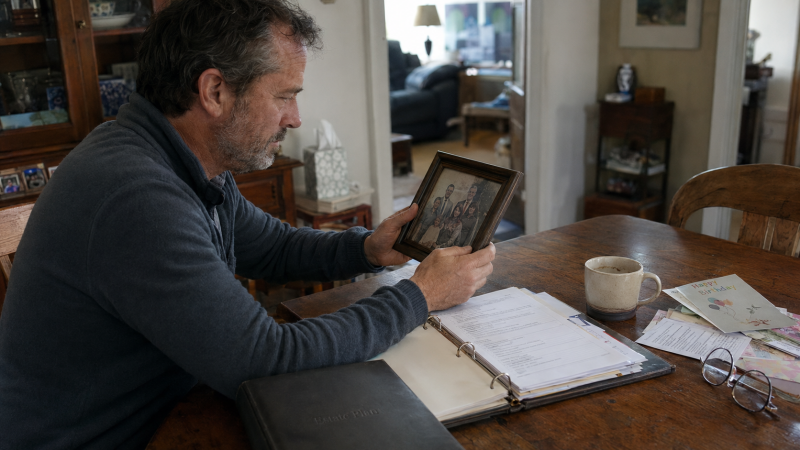
Most people think estate planning is about preparing for death.
In reality, it's about making life a little easier for the people you leave behind.
A well-prepared estate plan can determine who receives your home, your savings, your investments, and your personal belongings. It can name guardians for your children, appoint someone to make medical decisions on your behalf, and help your family avoid unnecessary legal complications during one of the hardest times of their lives.
Those things matter.
They matter a lot.
But after the paperwork has been signed, the documents have been notarized, and everything has been placed neatly into a binder or stored in a safe, there is still something missing.
Not legally.
Emotionally.
Because once the attorney has done everything they were hired to do, your family is often left with something no legal document can answer.
Questions.
Not questions about who gets the house.
Questions about you.
Questions they'll think of months later while cleaning out your closet. Questions they'll ask years later after becoming parents themselves. Questions that don't seem important until the only person who could answer them is gone.
It's strange how grief works.
The first few weeks are filled with logistics. Funeral arrangements. Insurance companies. Banks. Attorneys. Probate. Phone calls.
Everyone is busy.
Then life begins settling back into something that almost resembles normal.
That's usually when the real questions begin.
Why did Grandpa always whistle that song?
How did Mom meet Dad?
What was your happiest memory?
What scared you the most?
What were you like before we were born?
Why did you choose this house?
Why did you keep that old watch?
Did you know how proud I was of you?
Or maybe the question is even simpler.
What would you say to me today?
No attorney can put those answers into a will.
No trust can preserve someone's laugh.
No healthcare proxy can explain why someone made the choices they made throughout life.
Estate planning protects assets.
It doesn't preserve conversations.
And that's not a criticism of estate planning.
It's simply recognizing that legal planning and emotional planning are two completely different things.
One protects your estate.
The other protects your legacy.
People often use those words interchangeably, but they aren't the same.
Your estate is everything you leave behind.
Your legacy is everything people carry forward.
One has value on paper.
The other has value in memory.
Most families don't realize the difference until they're standing in a living room surrounded by boxes, deciding what to keep and what to donate.
A coffee mug isn't valuable because it cost twenty dollars.
It's valuable because it reminds someone of Saturday mornings together.
An old fishing rod isn't important because of the brand.
It's important because Dad taught you how to cast with it.
A handwritten recipe isn't treasured because of the ingredients.
It's treasured because you can almost hear Grandma explaining why she never actually measured anything.
Objects become meaningful because of the stories attached to them.
Without the stories, they're often just... objects.
That's one of the reasons genealogy has exploded in popularity over the last decade.
People spend hundreds or even thousands of dollars tracing family trees back hundreds of years.
They discover names.
Birth dates.
Marriage records.
Military service.
Immigration records.
Sometimes they even find photographs.
But despite all that research, there's one thing almost nobody finds.
The person's voice.
You can learn where your great-grandfather lived.
You may never know what he sounded like when he laughed.
You can discover your grandmother's maiden name.
You'll probably never hear her explain what growing up during her childhood was really like.
History tells us what happened.
People tell us what it felt like.
Those are two very different things.
Think about your own family for a moment.
Is there someone you've lost whom you would give almost anything just to ask one more question?
Not because you need advice.
Not because you have unfinished business.
Just because you miss hearing how they explained things.
Maybe you've become a parent and suddenly want to know how they handled raising kids.
Maybe you've reached the age they were when you knew them and finally understand the pressures they were carrying.
Maybe you simply want to hear them say your name one more time.
None of those wishes involve money.
Yet they're often what families long for the most.
That's where estate planning unintentionally leaves a gap.
Again, not because attorneys are missing something.
They're doing exactly what they're trained to do.
They help families protect assets, reduce conflict, minimize taxes when possible, and make sure legal wishes are carried out.
That work is incredibly important.
But legal planning answers legal questions.
It doesn't answer personal ones.
Imagine two families.
The first inherits a perfectly organized estate plan.
Every account is listed.
Every beneficiary is named.
The will is clear.
The trust is funded.
The process is smooth.
The second family receives all of that.
But they also receive something else.
The sound of their father's voice explaining why he made certain decisions.
Stories about the photographs tucked inside an old album.
A message for future grandchildren he would never get the chance to meet.
Birthday wishes scheduled years in advance.
Encouragement for life's biggest milestones.
Advice that sounds exactly the way he always gave it.
Neither family has a better estate plan.
One simply has something the other doesn't.
Presence.
Not physical presence.
Emotional presence.
That distinction matters.
Because after the legal process ends, grief doesn't.
In many ways, that's when it truly begins.
People don't stop missing someone because probate closes.
They don't stop wishing they could ask one more question because the house has been sold.
Those moments happen years later.
On wedding mornings.
The day someone becomes a parent.
After a difficult diagnosis.
During career changes.
At graduations.
On quiet Sunday afternoons when a random memory appears out of nowhere.
Those are the moments people instinctively reach for the phone before remembering they can't.
Unless, somehow, they still can.
Not through artificial intelligence.
Not through a computer trying to recreate someone's personality.
Through the person's own voice, intentionally recorded while they were here.
There's something profoundly different about hearing someone speak to you knowing every word came directly from them.
No guessing.
No imitation.
No algorithm trying to predict what they might have said.
Just them.
Exactly as they wanted to be remembered.
That isn't replacing grief.
Nothing replaces grief.
It's preserving connection.
For estate planning attorneys, that creates an opportunity that hasn't really existed before.
Clients already come to you because they're thinking ahead.
They're organizing documents they'll hopefully never need for many years.
They're making difficult decisions today because they love the people they'll eventually leave behind.
That's exactly the kind of person who understands preparation.
Most clients have never been asked a simple question:
"Along with your legal documents, have you thought about leaving your family something they'll hear, not just something they'll inherit?"
It's not replacing wills.
It's not replacing trusts.
It's complementing them.
A will answers, "Who receives what?"
A personal message answers, "What do I want them to know?"
Both matter.
They're simply solving different problems.
One protects families financially.
The other supports them emotionally.
The truth is, most people spend far more time deciding who gets the dining room table than deciding what they want their children to hear twenty years from now.
That's understandable.
The legal system gives us a checklist.
Life doesn't.
Nobody reminds us to record the stories behind the family traditions.
Nobody tells us to explain the photographs.
Nobody suggests leaving words of encouragement for milestones we know we'll probably miss someday.
By the time people realize those things matter, the opportunity is often gone.
Maybe that's why conversations about estate planning shouldn't end when the paperwork is complete.
Maybe they should end with one final question.
"If your family could ask you anything after you're gone, what would you want them to already know?"
That's a question no attorney can answer for you.
Only you can.
And maybe the greatest gift you'll ever leave isn't another document tucked inside a folder.
Maybe it's your voice explaining everything the paperwork never could.
At StillHear, that's exactly what we believe.
Estate planning protects what you've built.
StillHear helps preserve who built it.
Those two ideas don't compete with each other.
Together, they create something far more complete.
Because your family will certainly appreciate the inheritance you leave behind.
But years from now, when they're missing you more than they ever expected, they may treasure hearing your voice even more than receiving your possessions.
The paperwork protects your estate. Your voice protects your legacy.
Your family will inherit your possessions. Give them something even more personal. Your own voice, delivered when they need it most.
Add comment
Comments